
Checking for a Warrant in Halifax County
Virginia's Online Case Information System, known as OCIS is the fastest first stop for an adult case in Halifax County. It shows clerk-entered case data for participating courts. It is not a warrant list. A name match can point to a file, but only the clerk can confirm whether a capias, arrest warrant, or other process is still active. Match the court to the paper. Halifax General District Court handles adult traffic and misdemeanor cases. The Circuit Court keeps felony files. Juvenile, support, and family matters go to JDR, where public online access is limited.
- Search OCIS by the name as printed on the summons, citation, or court paper. A partial name is allowed, but each name entry needs at least two characters.
- Choose a hearing-date search if a missed date is known. Set the court filter to Halifax instead of relying on the default selection.
- Compare the court, case number, offense date, hearing date, charge, and code section. A case number is not always a warrant number.
- Call the issuing clerk to ask whether the record shows active process and what action is allowed.
- If the matter is new or custody is a concern, call the magistrate or an attorney before appearing in person.
Halifax County OCIS Is a Case Lead
Halifax County has no dedicated sheriff warrant lookup, so the state OCIS search is the public starting point. Its data depends on clerk entry. Entries can be delayed, incomplete, or down for maintenance. The system does not query VCIN or NCIC. Those stay inside law enforcement. Read the terms before searching. They require an acknowledgement and bar excessive or automated searches. Still, a clean result proves little. New process, sealed matters, JDR cases, or papers a clerk has not entered can all sit outside the system. The official OCIS search help explains the name, court, hearing-date, and case-detail controls, so use a result to spot the right office and then ask the Halifax County court for current status. The Virginia Judiciary lays out the public system and its limits on the OCIS terms page. That Virginia Courts Online Case Information System page is the official search screen itself.
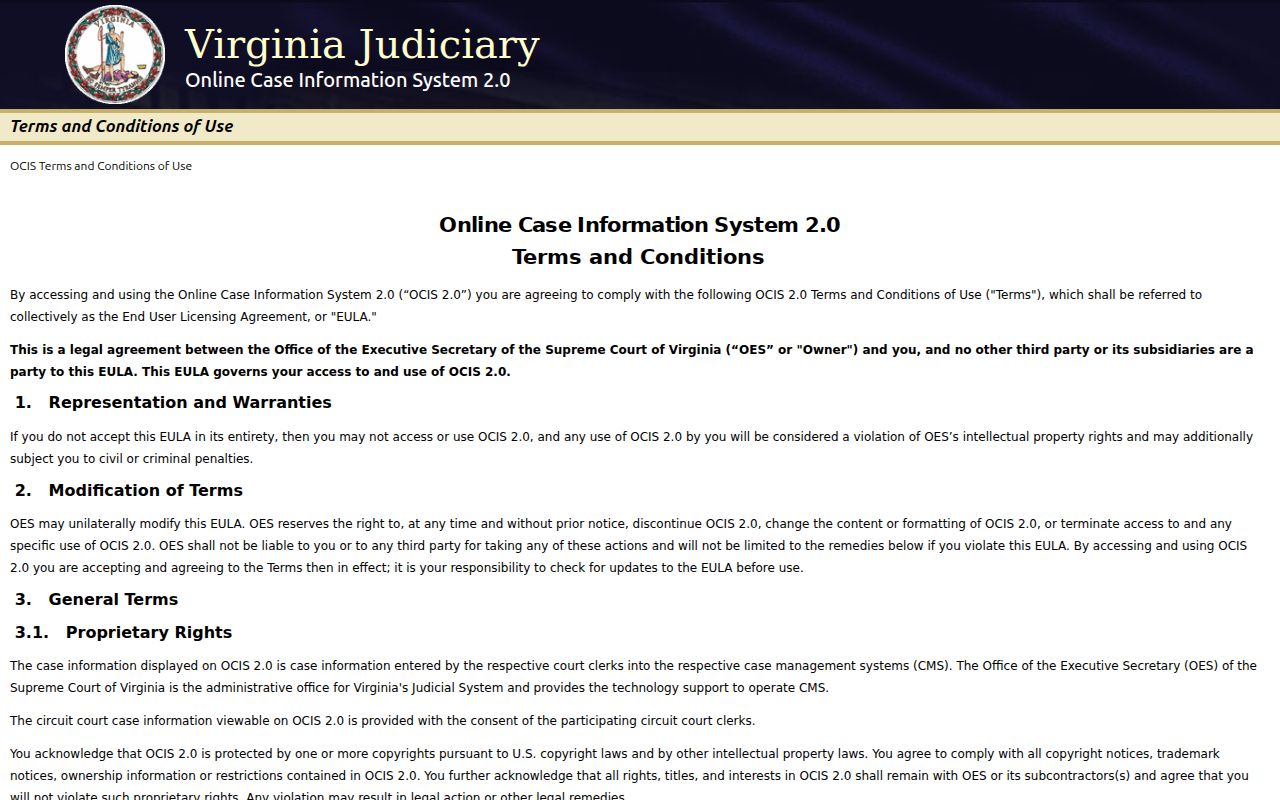
The screenshot shows the state's terms and case-search context, not a person's warrant record.
Halifax County Warrant Types
Virginia process comes in several forms, and the right route depends on the event behind it. An arrest warrant follows a probable-cause review. A capias for failure to appear ties to a court case and a missed required date. A search warrant is different. It authorizes a search of a place, item, or person. That is not a public check on whether someone in Halifax County faces arrest.
| Process | How It Starts | Local Record Route |
|---|---|---|
| Arrest warrant | Complaint and probable-cause review | Magistrate, then the court handling the case |
| FTA warrant or capias | Willful missed appearance or court noncompliance | Halifax GDC, Circuit, or JDR by case type |
| Search warrant | Affidavit supporting probable cause to search | Circuit Clerk, subject to sealing rules |
| Summons or show-cause process | Direction to appear or answer a court issue | Issuing court and its clerk |
Halifax County Warrant Files at Court Square
Several court offices share the 8 South Main Street courthouse area, but they keep different case files. The General District Court Clerk, Veresia Wood, handles adult traffic and misdemeanor matters at Suite 200. Circuit Clerk Cathy M. Cosby handles circuit criminal records. JDR Clerk Brandy Strohm Conner handles juvenile and family matters on the first floor.
Identify the case level before you call or visit. The Circuit Court's public page lists its clerk and contact details; the Virginia Judiciary Circuit Court listing is a useful starting point. Court hours do not promise that a judge can hear a warrant matter as a walk-in.
Virginia's court map places Halifax in Circuit 10 and District 10. The same public counter area can hold records with very different access rules.
Image source: Halifax Circuit Court's official clerk page.
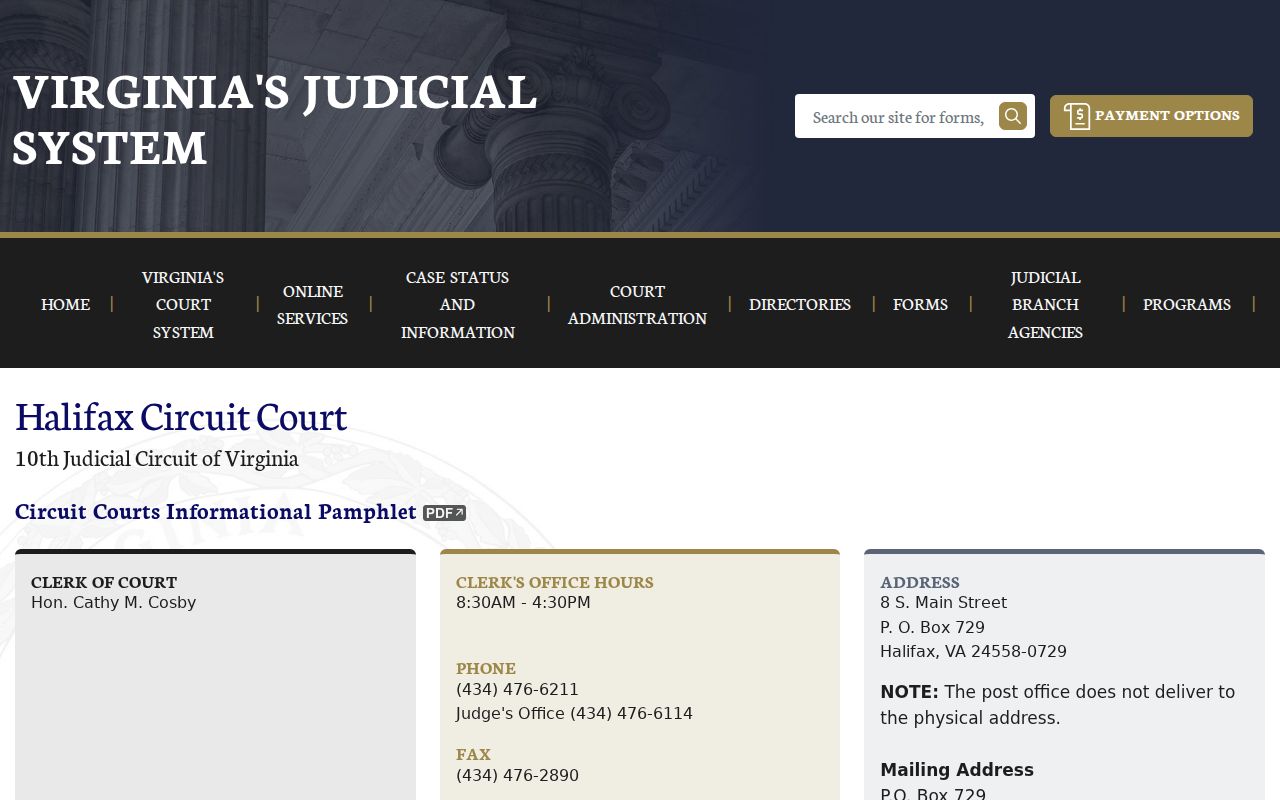
On this official court page, Halifax County visitors can separate felony file questions from adult traffic or misdemeanor records.
Inside a Halifax County Warrant Record
Virginia sources publish no single Halifax County warrant-number format and no public list of status codes. Treat the case or citation number in OCIS as a reference only. It is not proof of the warrant identifier. Ask the clerk to match case and process record.
| Case number | Identifies the court case; it may differ from a warrant number. |
|---|---|
| Court and date | Shows which court owns the file and which hearing may matter. |
| Charge | Lists an offense or code section, but does not show every warrant detail. |
| Process type | May be an arrest warrant, FTA capias, summons, or show-cause order. |
| Bond and status | May not appear in OCIS. Confirm release terms and active status with the clerk or magistrate. |
| Service return | Records whether an officer served or returned the process. |
Requesting Halifax County Warrant Records Through FOIA
When the online case view does not answer a records question, the Halifax County Sheriff's Office lists a FOIA email at foiaofficer@co.halifax.va.us. Name the record, court or agency, type of process, date range, and case number if known. Court-held files belong with the clerk, not the sheriff. Virginia FOIA sets a clock. An office generally must respond within five working days. The reply may provide records, explain a withholding, state that nothing responsive exists, or send a timely extension notice. Fees rest on reasonable actual costs. Ask for an estimate first if cost matters. Adult arrest identity and status may be disclosed under state law, while active investigations, sealed or expunged records, juvenile information, and protected details can be withheld. A FOIA reply is a records response. It is not a court order that clears a warrant in Halifax County.
Issuing and Serving Warrants in Halifax County
A magistrate or other authorized judicial officer can issue arrest process after reviewing a complaint and finding probable cause. The case then belongs to the court with jurisdiction. The Halifax County sheriff, town police, Virginia State Police, or another directed officer may serve the order. Sheriff's public materials cover court security, prisoner transport, and law enforcement. They name no public warrant unit. No warrant phone line or surrender counter appears either. Ask the issuing court for status. Use the sheriff's main office for service or agency routing.
Halifax County Sheriff's Office
134 South Main Street
Halifax, VA 24558
434-476-3339
Halifax County posts the sheriff's public hours and dispatch role on its official directory contact page.
Halifax County Warrants Follow Docket Lines
Docket days in Halifax County split by agency and town. South Boston traffic and criminal matters land in General District Court on Mondays. Halifax town matters come up the first Friday. Sheriff's Department cases run Tuesdays, and Virginia State Police matters on Thursdays. Those labels help a caller figure out which agency sits behind a summons. None of it creates a separate municipal court, though, and no town here runs a public warrant database. South Boston and Halifax each have police departments, yet adult traffic and criminal records still flow through GDC. Virgilina and Scottsburg offer no separate public warrant portal either. The Virginia Courts Circuit 10 map shows where Halifax County fits in the district's court structure.
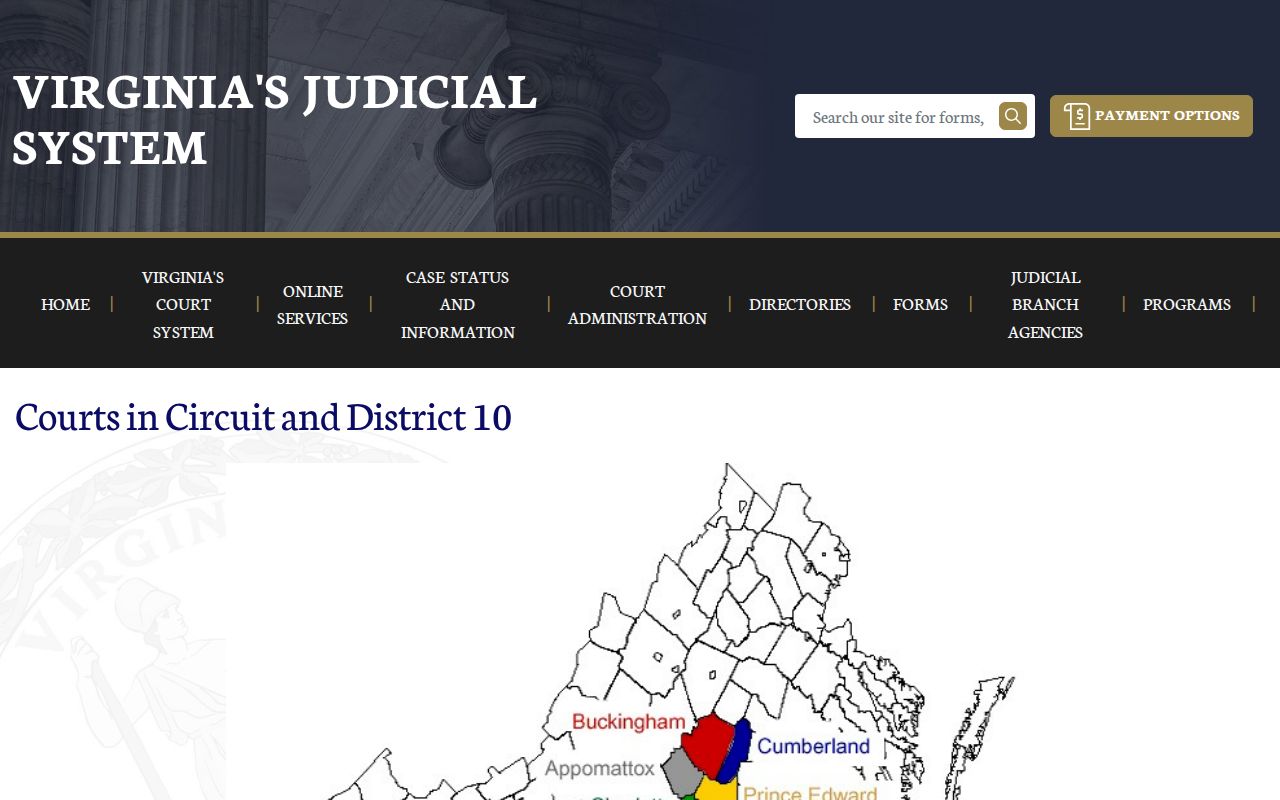
The statewide court map lays out every court level serving Halifax County and its towns.
If You Have a Warrant in Halifax County
First find out which court issued the warrant and whether it is still active. Call the clerk with the case number, the name as written, and the hearing date. Then ask what clears it: a new court date, a written motion, payment, bond, or an appearance set up by a lawyer. If the clerk says a judge must act, a phone call alone does not change the record.
Before appearing: ask the clerk, magistrate, or attorney whether an in-person visit could lead to immediate custody and where the court wants you to report.
No Halifax source promises a walk-in surrender path, a local recall form, a bond window, or same-day release. A lawyer can ask the Halifax County court about a lawful appearance, bond terms, or a motion to recall or quash. Posting bond changes custody status without ending the case itself.
Halifax County Warrant Questions at 1010 Blue Ridge
Two offices share one address at 1010 Blue Ridge Lane: the District 10 magistrate office and the Halifax County Adult Detention Center. The magistrate line is 434-476-2071. The detention center's public number is 434-476-5500. Their work is different, though. Magistrates handle authorized initial process and release decisions, while the detention center runs custody operations. Call first to ask where a bond or booking question belongs, and do not treat the facility as a public warrant lookup counter.
Halifax County Warrant Records and Public Access
Virginia FOIA covers requests to state and local public bodies, but access turns on record type. Adult court and law-enforcement records may be open in part. Juvenile records, sealed matters, expunged records, and active investigative files face limits. A public online view is not the full court file.
Rules to know:
Virginia Code § 2.2-3704 sets FOIA response and cost rules.
Virginia Code § 2.2-3706 covers law-enforcement record access and limits.
Virginia Code § 16.1-301 protects many juvenile law-enforcement records.
Traffic FTA Is Not One Rule in Halifax County
One traffic miss does not mean one rule in Halifax County. The General District Court manual splits traffic infractions from traffic misdemeanors. Skip an infraction trial and the manual's rule says no arrest warrant follows; the court may try the matter in your absence and send a fine notice. Willfully miss a traffic misdemeanor and an FTA warrant or show-cause process can result. Virginia Code § 46.2-938 covers certain traffic nonappearance consequences on its own. The DMV adds that courts may not suspend driving privileges solely for unpaid fines or costs after July 1, 2019. Since these are separate rules, ask Halifax GDC what process the case record actually shows.
2018 Halifax County Warrant-Related Workload
The official 2018 Halifax GDC report gives a picture of warrant-related workload. It lists 80 criminal capias filings and 70 traffic capias filings, plus 287 criminal and 70 traffic show-cause filings. The caseload side shows 1,169 misdemeanor cases, 309 felony cases, and 5,038 traffic infractions. Those are historical court categories. They are not a count of active Halifax County warrants today. They do show why a search should pin down the case type and court rather than treating every capias, show-cause order, and arrest warrant as the same record.
Halifax County Warrants by City
Four incorporated towns appear on the 2020 Census list for Halifax County. South Boston and Halifax each run town police departments, though adult traffic and criminal matters are still scheduled in Halifax GDC. Scottsburg and Virgilina have no separate public warrant portal. For those towns, the county courts and sheriff are the practical confirmation route.
South Boston Warrant Search
7,966 residents in 2020; town police routing and Halifax GDC Monday dockets.
Halifax Warrant Search
1,118 residents in 2020; town police and first-Friday GDC settings.
Scottsburg Warrant Search
127 residents in 2020; no separate local warrant system located.
Virgilina Warrant Search
126 residents in 2020; use Halifax GDC and county offices for routing.