
Halifax County Bench Warrants Explained
Halifax County clerks and lawyers may say "bench warrant," but the paperwork often reads differently. Virginia files can say "warrant for failure to appear," "capias," or "capias to show cause." The label matters less than the issuing court. So does the reason listed in the file. Halifax County publishes no single public roster of these records. OCIS may show the underlying adult case. Only the clerk can confirm whether the court issued process and whether it stays active.
How Halifax County Bench Warrants Are Issued
Miss a summons or a release date, and Virginia law allows willful failure-to-appear process. Courts can also issue show-cause process after someone ignores an order. A capias commands an officer to bring a person before a judicial officer. It is not a new charge. Traffic or misdemeanor questions go to Halifax GDC. A Circuit case belongs with the Circuit Clerk. JDR keeps juvenile, domestic, and support process with public access limits, and the statute behind FTA process is Virginia Code § 19.2-128.
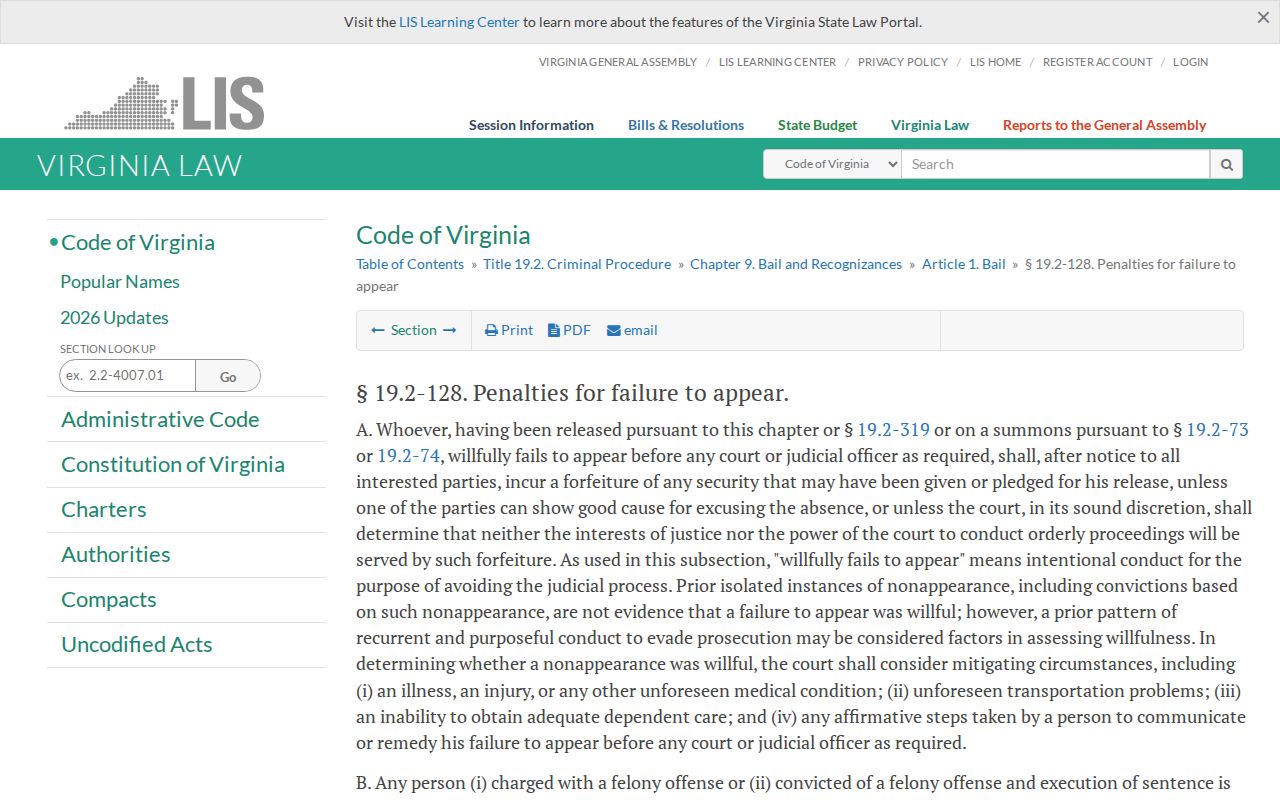
Virginia Code § 19.2-128 covers willful failure to appear and related process.
Bench Warrants and Arrest Warrants Compared
The two terms start from different events. A bench warrant follows a missed court obligation. In Halifax County, an arrest warrant instead begins with probable cause for an offense, and a capias is Virginia's process word, usable in more than one court setting.
| Record | Why It May Issue | First Contact |
|---|---|---|
| FTA or bench process | Missed appearance or court noncompliance | Clerk for the existing case |
| Arrest warrant | Complaint and probable-cause review | Issuing magistrate or court |
| Capias to show cause | Direction to answer a court issue | Court named on the form |
Not every unpaid fine turns into a bench warrant. Halifax payment policies and missed-appearance law cover separate issues.
A Capias Is Halifax County's Local Process Word
Virginia court forms lean on "capias" and "capias to show cause." The Circuit Court's form CC-1356 orders a person to appear before a judicial officer, and District Court papers say "capias, attachment of the body." Halifax County forms do not use "capias pro fine."
- Capias
- Process directing an officer to bring a person before court.
- FTA
- Failure to appear when a summons, release, or order required a court appearance.
- Show cause
- A court request to explain why further action should not follow.
- Recall or quash
- A court action withdrawing or setting aside process; the underlying case may continue.
Resolving a Halifax County Bench Warrant
Give the clerk the case number and court. Ask whether a scheduled appearance, payment, written motion, show-cause hearing, or bond is available. If the clerk says a judge must act, ask whether counsel should file the motion. No Halifax recall form, standard fee, or warrant window exists.
Call before you go: no local source promises that an unplanned walk-in will avoid booking or produce same-day release.
Keep the receipt or order after paying or appearing. Ask the clerk to confirm the process status. Paying a fine alone does not prove the warrant was recalled.
South Boston Monday Dockets and Missed Dates
Halifax GDC sets South Boston town traffic and criminal matters on Mondays, with four docket blocks at 8:30 a.m., 9:00 a.m., 11:00 a.m., and 1:00 p.m. A missed South Boston setting stays in the court file. Halifax County runs no separate municipal warrant portal. Call the Halifax County GDC Clerk at 434-476-3385 with your summons or case number. Ask which docket held the matter and whether an FTA process was issued. The next Monday is not an automatic reset. Payment alone does not close the process either. The Halifax General District Court official page posts the court's schedule and contact details.
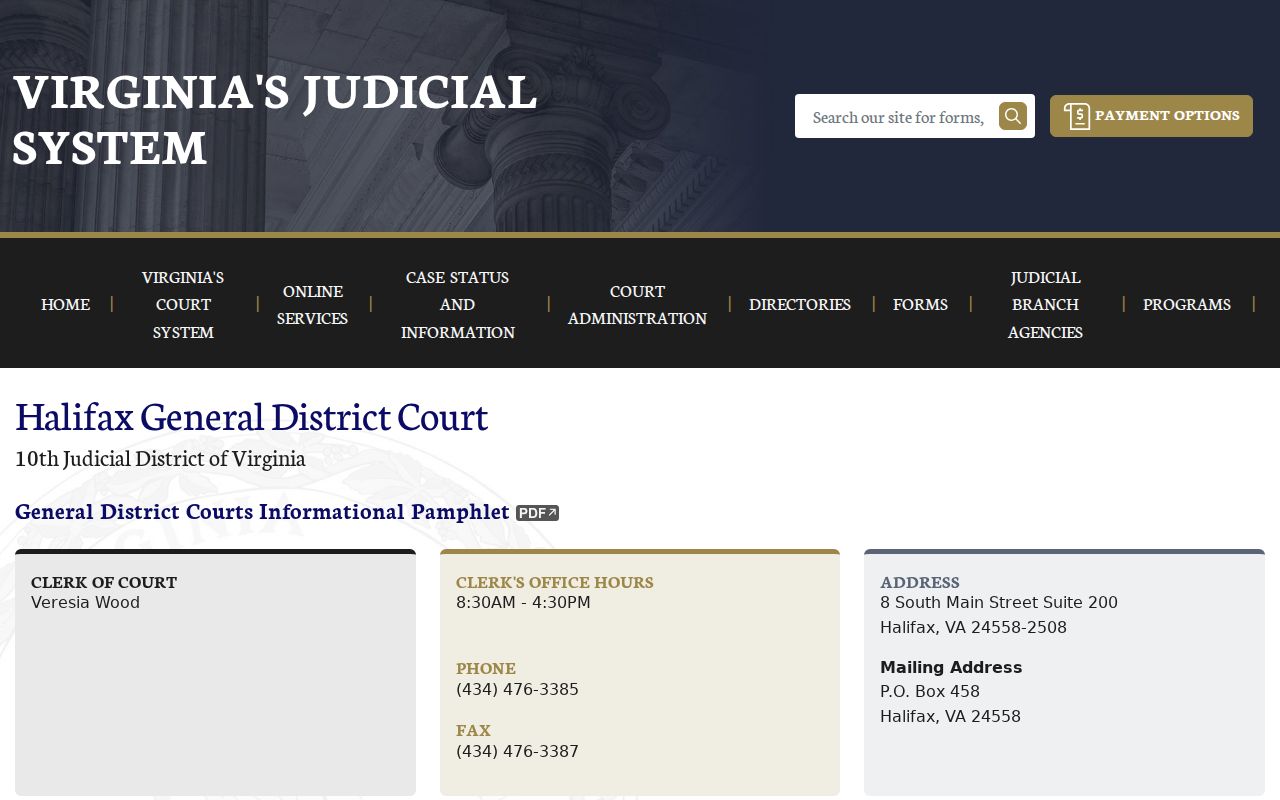
The official docket page maps local town and agency settings to Halifax GDC.
Which Court Issued the Warrant?
Each Halifax County court plays a different part. GDC takes adult traffic and misdemeanor cases plus felony preliminary hearings. Circuit Court handles felonies after indictment and keeps circuit criminal process. JDR holds juvenile, support, and family records. Magistrates review new complaints and initial release matters. Start with the court named on the case paper. If the case moved after a preliminary hearing or indictment, ask the clerk where the active file now sits.
JDR DC-635 and Halifax Support Process
Virginia's DC-635 form asks a JDR court for a show-cause summons or capias. It carries the case number, hearing date and time, court, parties, contact details, and the reasons for the request. It is a court form. It is not a self-service warrant lookup. Halifax County JDR files hold juvenile and domestic-relations matters. No public online JDR case search exists. Call the Halifax County JDR Clerk before sending personal details or appearing, and ask what may be disclosed and whether an attorney or party must make the request. The Halifax Juvenile and Domestic Relations Court official page posts the court's contact details.
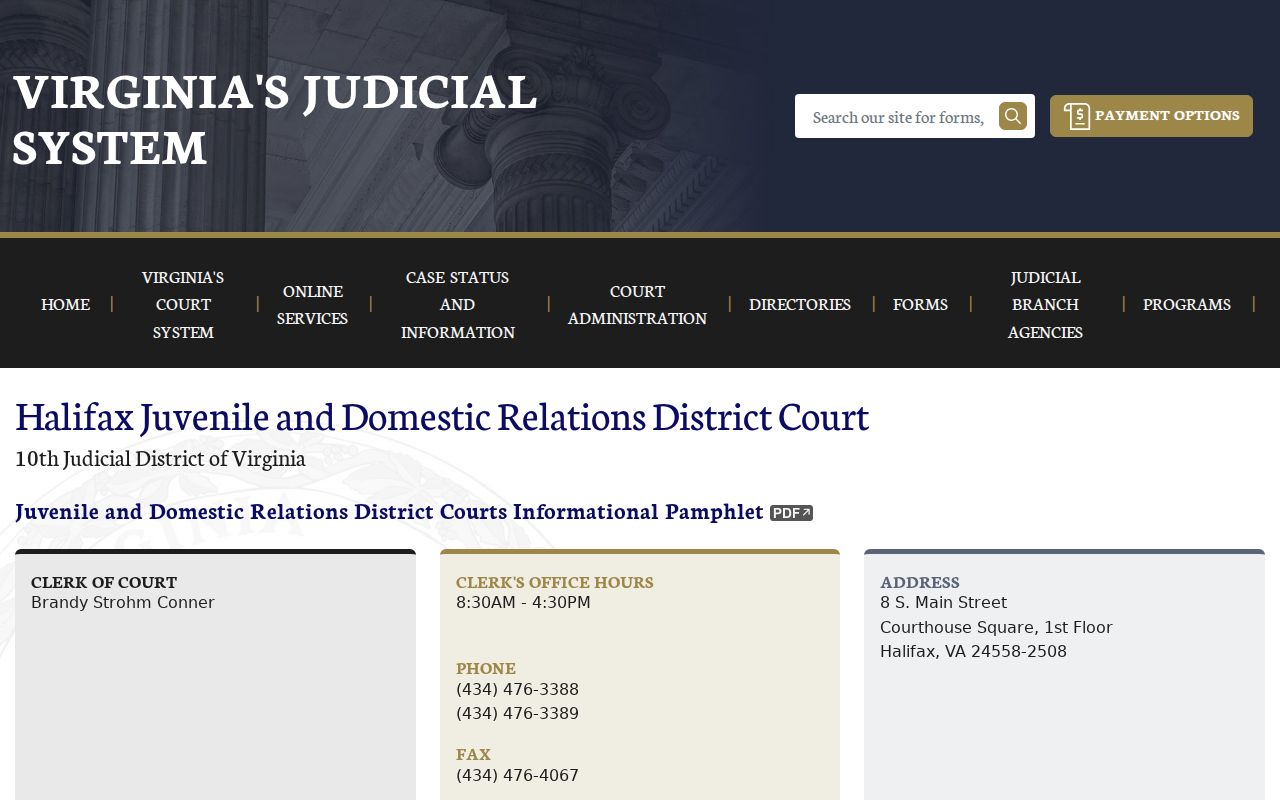
The local JDR page gives clerk and schedule information while protecting confidential case records.
Traffic Infraction FTA Is Not an Arrest Warrant
The General District Court manual draws a sharp line. A missed traffic infraction trial creates no arrest warrant. The court may hear the matter without you and mail a fine notice. Traffic misdemeanors follow a different rule. Willful failure to appear there may lead to a warrant or capias. Ask Halifax GDC what citation is in the file. Before assuming what happened, remember that a ticket, an FTA process, a fine, and a license issue are not interchangeable records.
Confirm a Halifax County Capias Is Recalled
Check with the clerk who issued the capias before you assume it is gone. Ask what status the Halifax County record now shows. Served, returned, recalled, quashed, and satisfied each mean something different, so get the exact word. The public OCIS view can lag behind the clerk's entry, and Halifax County publishes no update schedule for it. Hold on to any court order, receipt, or release paper you receive. A cleared warrant does not dismiss the charge itself, and other case requirements can still stand. For the full path from here, read what to do when you have a Halifax County warrant.