
Halifax County Arrest Warrants Explained
Halifax County Arrest Warrants Explained
A Halifax County arrest warrant starts with a complaint or sworn facts brought to a judicial officer. That officer weighs whether probable cause backs the request. If it does, the warrant names the accused, states the offense, orders an appropriate officer to arrest, and requires an appearance before a court with jurisdiction. Virginia Code §§ 19.2-71 and 19.2-72 spell out who may issue arrest process and what it must contain. In Halifax County, a new complaint often begins with a magistrate. The case file later sits with the GDC or Circuit Court.
Probable Cause Under Virginia Law in Halifax County
Probable cause is a facts-based legal standard. Before issuing any process, the Halifax County magistrate examines the complaint and may hear witnesses under oath. A written complaint is required in specified circumstances, felony complaints among them. Some felony complaints from non-law-enforcement sources also need prior authorization under the statute. This review is separate from how the case ends. The warrant simply brings a person before the court. Virginia Code § 19.2-72, at Virginia Code § 19.2-72, sets out the process.
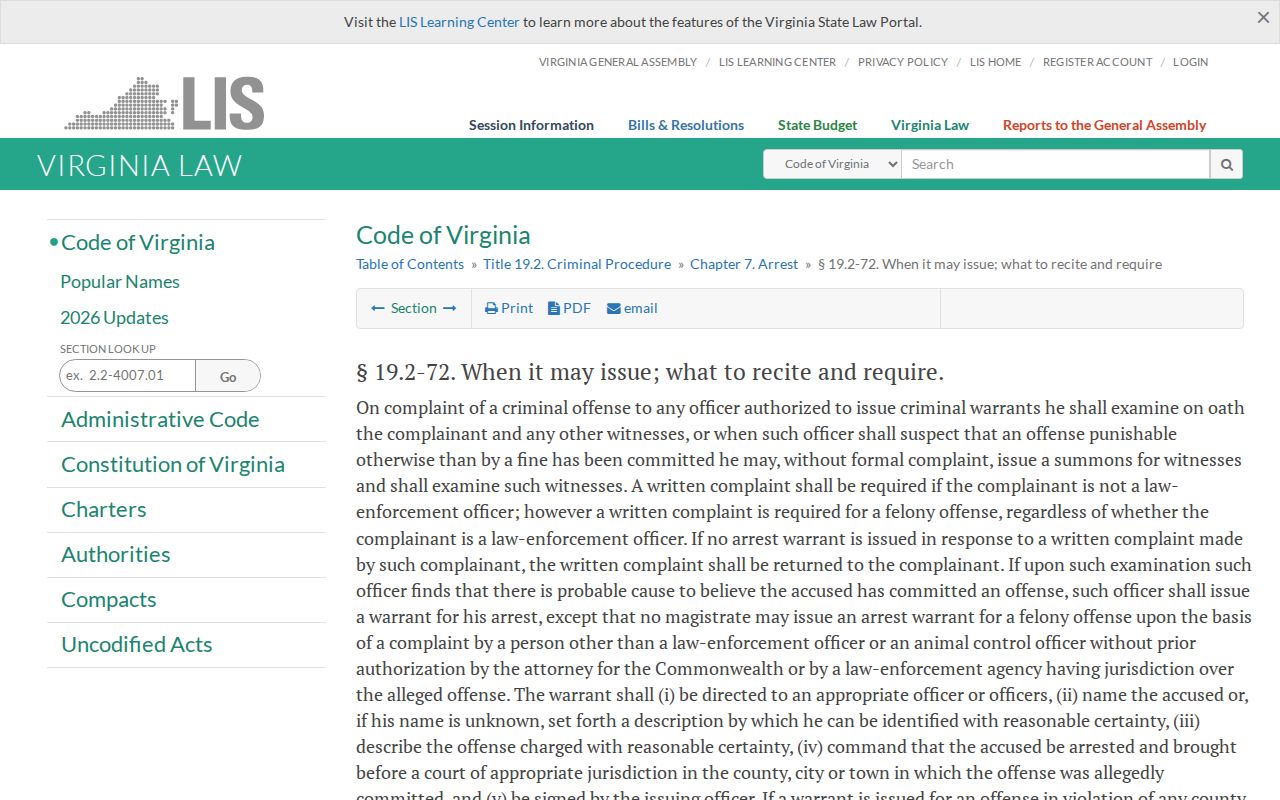
Virginia Code § 19.2-72 sets out the probable-cause issuance and warrant-content rules.
Inside a Halifax County Arrest Warrant
Virginia law requires a Halifax County warrant to identify the accused or describe the person with reasonable certainty, state the offense, direct an arrest, and carry the issuing officer's signature. The full court record may hold more detail than a public OCIS result shows.
| Issuing officer | Magistrate or other authorized judicial officer. |
|---|---|
| Person named | Name or identifying description sufficient to identify the accused. |
| Offense | Description of the offense and any linked code section. |
| Directed officer | Agency or officer authorized to serve the process. |
| Case and return | Case number, service result, and any later court action. |
| Bond terms | Set by a judicial officer; Halifax has no public universal bond schedule. |
Magistrate to GDC to Circuit: Halifax Felony Path
A Halifax felony can travel a long path. It may start with magistrate process, move to a General District Court preliminary hearing, then proceed to indictment and trial in Circuit Court. Adult misdemeanor and traffic cases generally stay in GDC. So the right clerk depends on where the case sits now, not just where the first complaint began. For adult traffic and misdemeanor files, call GDC at 434-476-3385. For felony or circuit criminal process, call the Circuit Clerk at 434-476-6211. If the process is brand new, the magistrate office at 434-476-2071 can route your question in Halifax County.
Serving Arrest Warrants in Halifax County
A warrant is directed to an appropriate officer, not to one fixed department. Service may fall to the Halifax County Sheriff's Office, Town of Halifax Police, South Boston Police, Virginia State Police, or another authorized agency. The agency that serves a warrant is not always the court that issued it or keeps the file. The Sheriff's Office sits at 134 South Main Street and lists 434-476-3339 as its public number. Town Police and VSP each have their own roles. Ask the court clerk about case status, and ask the named officer or agency about service routing in Halifax County.
Halifax County Warrant Custody at 1010 Blue Ridge
The Halifax County Adult Detention Center sits at 1010 Blue Ridge Lane, the same address as the magistrate office. Once a person is booked, the facility can answer custody routing questions. A magistrate or judge sets release terms; jail staff cannot change the court's order. Call the detention center at 434-476-5500 before assuming any bond method. The facility's page posts no universal bond amount, accepted payment type, or public warrant surrender schedule. The Blue Ridge Regional Jail Authority Halifax facility page carries the Halifax County custody details.
The official BRRJA page gives the local facility contact and location.
Comparing Arrest, Summons, and Bench Warrants
These papers grow from different events. A summons tells a person to appear on a set date. An arrest warrant, by contrast, lets an officer take someone into custody after a probable-cause review in Halifax County. Bench or FTA process follows a missed appearance or other court noncompliance.
| Process | Trigger | What to Confirm |
|---|---|---|
| Summons | Order to appear at a set time | Correct court and hearing date |
| Arrest warrant | Probable-cause review | Issuing officer, court, bond, and service status |
| Bench or FTA capias | Missed appearance or noncompliance | Underlying case, missed setting, and court action |
A missed Halifax County appearance can create new process. It does not convert the original document into a new-charge arrest warrant.
If There's an Arrest Warrant for You
Call the issuing clerk first. Ask whether the record shows active process, which Halifax County court holds the case, and whether an attorney-arranged appearance or motion fits. If a judge or magistrate must act, learn what documents and setting are needed. A lawyer can weigh custody risk and speak with the court for you.
Do not rely on a search alone: ask the issuing court or counsel before traveling to a police station, magistrate office, or detention center to turn yourself in.
Halifax County publishes no walk-in surrender form or promise of same-day release. Bond is case-specific. Posting it changes custody status under the order but never decides the underlying charge. The county's warrant-resolution steps list the local clerk, magistrate, and detention contacts.
Why the Sheriff's Main Number Is Not the Issuing Court
The Sheriff's Office can explain service routing, but the clerk controls the underlying case file. Ask only the sheriff whether a warrant exists, and you may miss a GDC, Circuit, JDR, or new magistrate question. Halifax County public sources name no warrant-unit direct line and post no local list. For a copy or nonexempt service record, use the sheriff's FOIA route. For active, recalled, or quashed status, ask the issuing court.
Search Warrants Follow a Separate Record Rule
A search warrant is not an arrest warrant. It lets officers search a spot, not decide who gets jailed. Virginia law still gives the public a way in. Under Virginia Code § 19.2-54, the affidavit must reach the circuit clerk within seven days. Anyone may then read it once the warrant is executed, or after 15 days, whichever comes first. A court can seal it longer for good cause. For a Halifax County affidavit, call the Circuit Clerk and ask whether that access point has passed or a sealing order still applies.
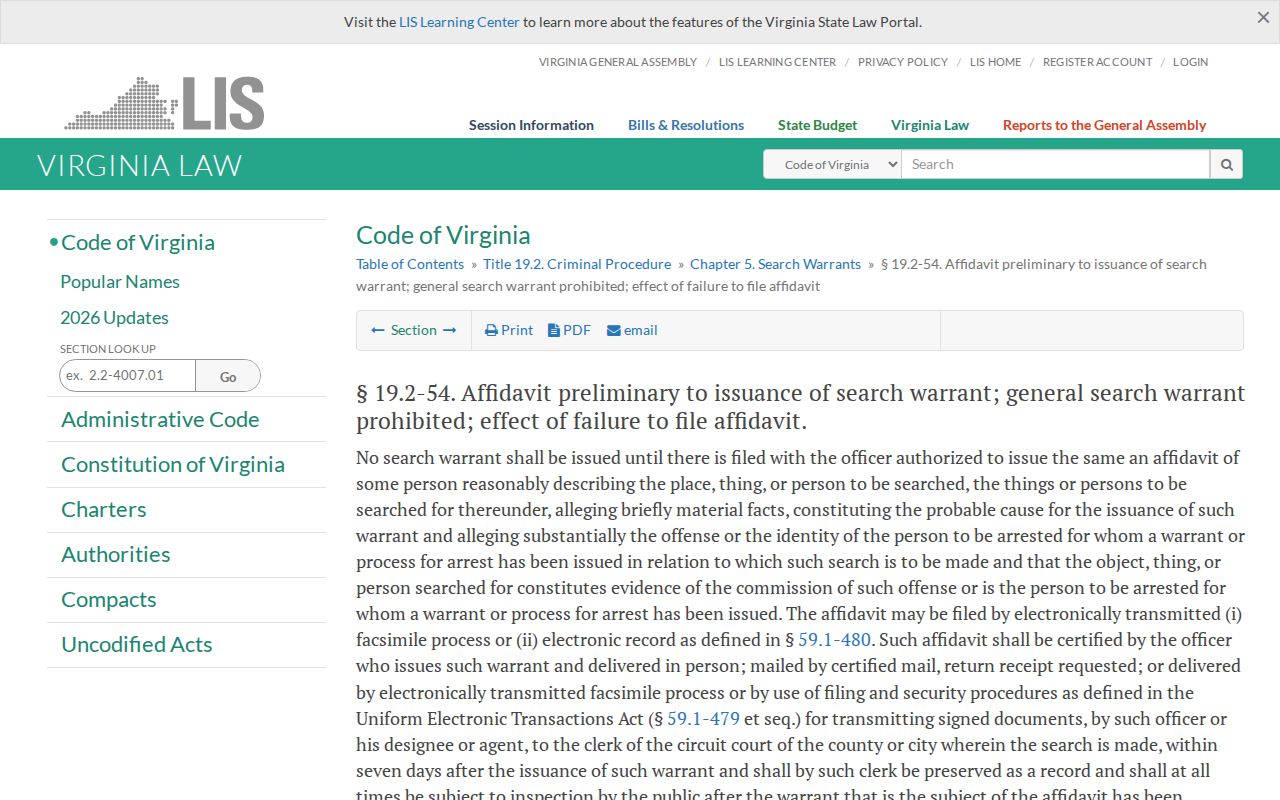
The filing and access rule appears in Virginia Code § 19.2-54.